Priorités et intersections
Maîtriser les règles de priorité pour traverser chaque type d'intersection sans hésiter : priorité à droite, STOP, cédez le passage et giratoires.
Mis à jour le 13 juin 2026
Qu'est-ce qu'une intersection ?
Une intersection est un lieu où se croisent au moins deux routes. Les sorties de parkings, de garages et de voies privées ne sont pas considérées comme des intersections : le véhicule qui en sort n'a jamais la priorité et doit céder le passage dans les deux sens.
En ville, la présence d'un trottoir continu indique une sortie de lieu privé (pas une intersection). Hors agglomération, observez le marquage au sol : si la ligne de rive se poursuit sans interruption, c'est également une sortie privée.
La priorité à droite : la règle de base
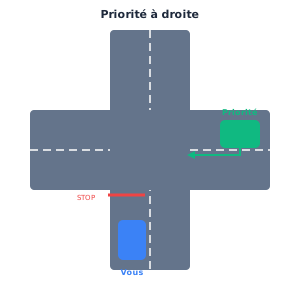
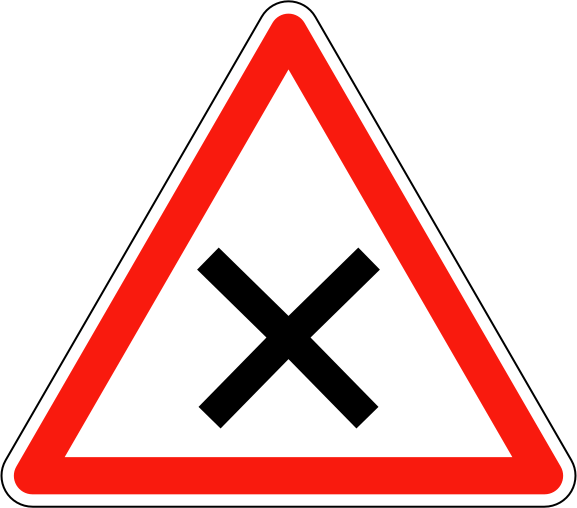
En l'absence de toute signalisation à une intersection, la règle de la priorité à droite s'applique : vous devez céder le passage au véhicule venant de votre droite. Le panneau de priorité à droite (triangle avec flèche noire venant de la droite) ne fait que rappeler cette règle lorsque l'intersection est jugée dangereuse.
Priorité à droite = règle par défaut. Pas de panneau et pas de marquage ? Regardez à droite et cédez le passage.
Piège fréquent à l'examen : à l'approche de toute intersection, même si vous pensez avoir la priorité, commencez toujours par ralentir et vérifier la signalisation. La priorité à droite peut s'appliquer là où vous ne l'attendez pas.
Le panneau STOP
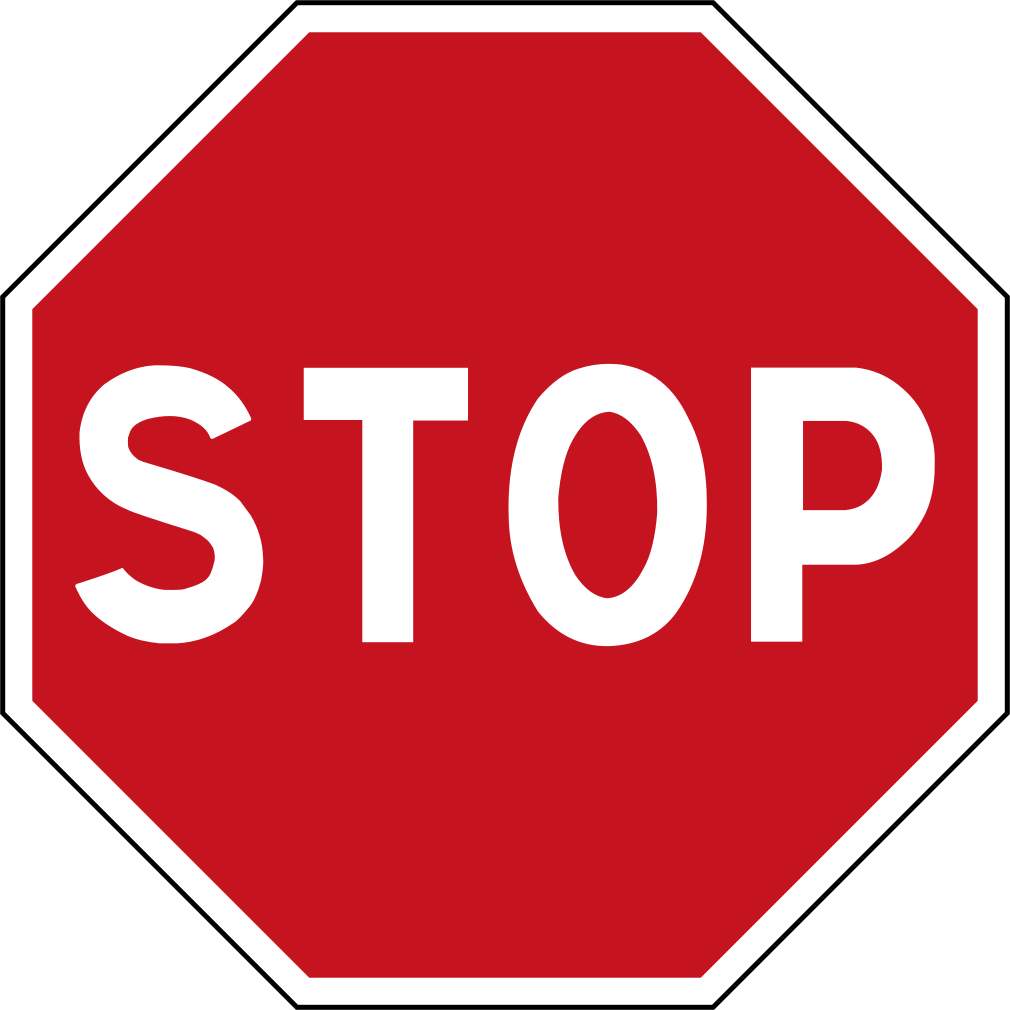
Le panneau STOP impose un arrêt complet du véhicule au niveau de la ligne d'arrêt. Vous devez ensuite céder le passage aux véhicules venant de la droite et de la gauche, puis vérifier que la voie est libre avant de repartir. Un simple ralentissement ne suffit pas : les roues doivent être totalement immobilisées.
Ne pas marquer l'arrêt à un STOP est sanctionné de 135 euros d'amende et d'un retrait de 4 points sur le permis.
Le panneau Cédez le passage
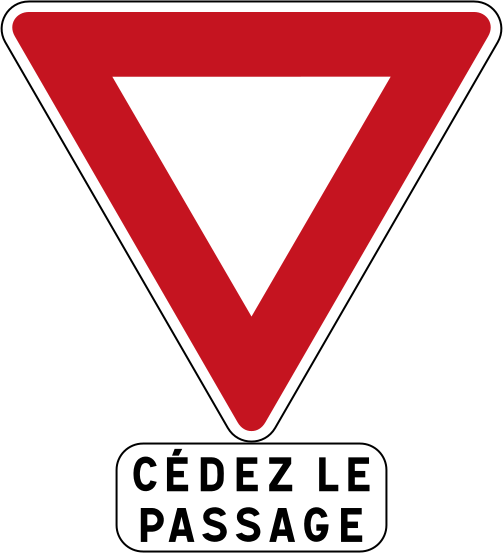
Ce panneau (triangle pointe en bas) vous oblige à laisser passer les véhicules venant de droite et de gauche. Contrairement au STOP, l'arrêt complet n'est pas obligatoire : si l'intersection est dégagée des deux côtés, vous pouvez passer en ralentissant. La ligne au sol associée est composée de pointillés de 50 cm, formant une ligne transversale (contrairement à la ligne continue du STOP). Dans une rue à sens unique, cette ligne s'étend sur toute la largeur de la chaussée.
La priorité ponctuelle et la route prioritaire
Le panneau de priorité ponctuelle (losange jaune avec une flèche) accorde la priorité uniquement à la prochaine intersection. Le panneau de route prioritaire (losange jaune) donne la priorité sur toutes les intersections de cette route, jusqu'au panneau de fin de route prioritaire.
Lorsqu'une route prioritaire traverse une agglomération et que son panneau est associé au panneau d'entrée de ville, la priorité est maintenue dans toute la traversée, sauf indication contraire (feux tricolores, par exemple).
Sur les intersections complexes (en Y ou à plusieurs branches), un panonceau schéma complète le panneau de priorité. Le trait épais représente l'axe prioritaire ; les traits fins, les voies non prioritaires.
Le cas d'égalité
Quand deux véhicules se trouvent face à face avec la même signalisation (STOP contre STOP, cédez le passage contre cédez le passage, ou aucune signalisation), c'est un cas d'égalité. Si vous allez tout droit ou tournez à droite, vous passez directement. Si vous tournez à gauche, vous devez laisser passer le véhicule d'en face pour ne pas lui couper la route.
Le carrefour à sens giratoire (rond-point)
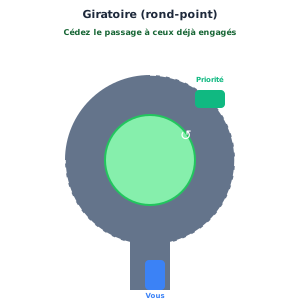
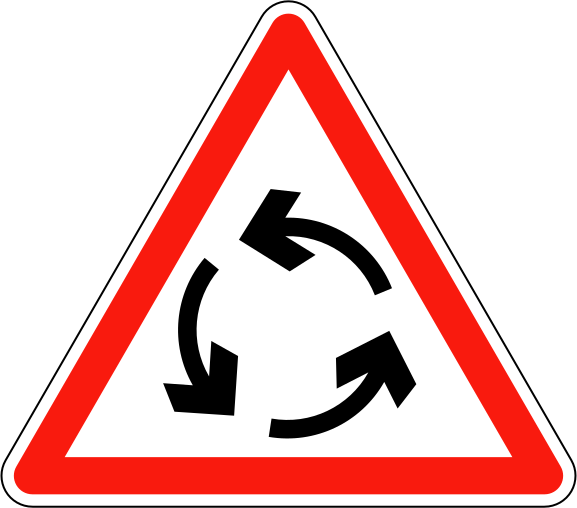
Au rond-point (carrefour à sens giratoire), les véhicules déjà engagés sur l'anneau sont prioritaires. À l'entrée, un panneau « cédez le passage » et une ligne de pointillés confirment que vous devez leur laisser le passage.
Le placement dans le giratoire dépend de votre direction : pour sortir à droite ou aller tout droit, restez sur la voie de droite ; pour aller à gauche ou faire demi-tour, rapprochez-vous du centre. Si vous ne connaissez pas votre sortie, restez à droite.
Clignotant dans le giratoire : gardez le clignotant gauche tant que vous restez sur l'anneau. Activez le clignotant droit dès que vous allez sortir.
Un rond-point sans signalisation reste soumis à la priorité à droite : les véhicules qui entrent auraient alors la priorité. C'est rare mais cela existe.
Les véhicules prioritaires
Les véhicules d'urgence (police, pompiers, SAMU) en intervention avec gyrophares bleus et sirène à deux tons sont les seuls autorisés à ne pas respecter les règles de priorité. Vous devez leur céder le passage et faciliter leur progression. Les véhicules d'intérêt général (ambulances privées, dépanneuses) utilisent des gyrophares à éclats bleus et un avertisseur à trois tons : ils ne sont pas dispensés des règles de priorité mais méritent votre coopération.
Un bus qui quitte son arrêt est prioritaire en agglomération. Ralentissez ou arrêtez-vous pour le laisser s'insérer. Soyez vigilant : des piétons peuvent surgir devant ou derrière le bus à l'arrêt.
À retenir
- Sans signalisation, la priorité à droite s'applique par défaut.
- STOP = arrêt complet obligatoire, puis céder le passage à droite et à gauche.
- Cédez le passage = ralentir et laisser passer, sans obligation d'arrêt complet.
- Dans un giratoire, les véhicules sur l'anneau sont prioritaires.
- Cas d'égalité en face à face : celui qui tourne à gauche cède le passage.
- Les sorties de lieux privés ne sont pas des intersections : pas de priorité.
- Les gestes d'un agent l'emportent sur tous les panneaux et feux.
- Les véhicules d'urgence en intervention (gyrophare + sirène) sont toujours prioritaires.
Testez-vous
À une intersection sans aucune signalisation, quelle règle s'applique ?
- ○Le premier arrivé a la priorité
- ○Le véhicule le plus gros passe en premier
- ✓La priorité à droite
- ○Chacun passe à tour de rôle
Bonne réponse : La priorité à droite
Quelle est la différence principale entre le STOP et le Cédez le passage ?
- ✓Le STOP impose un arrêt complet, pas le Cédez le passage
- ○Le Cédez le passage donne la priorité
- ○Le STOP ne concerne que les camions
- ○Les deux imposent un arrêt complet
Bonne réponse : Le STOP impose un arrêt complet, pas le Cédez le passage
Sources : Sécurité routière (securite-routiere.gouv.fr) et service-public.fr.