Information signs
Square blue signs inform and advise, without imposing a strict order.
Updated 15 June 2026
Information signs: the blue that informs
Information signs are square. They neither impose nor prohibit anything: they provide useful information to help your journey. There are two main families according to their appearance.
Square + blue background = driving-related information. Square + white background with blue border = services and facilities.
Driving information (blue background)
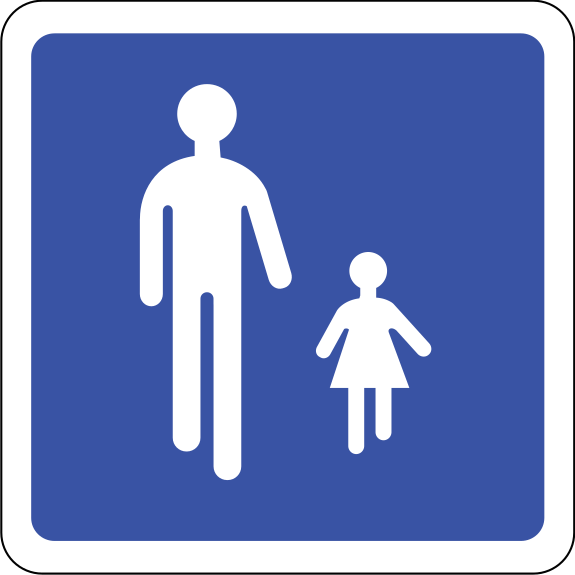
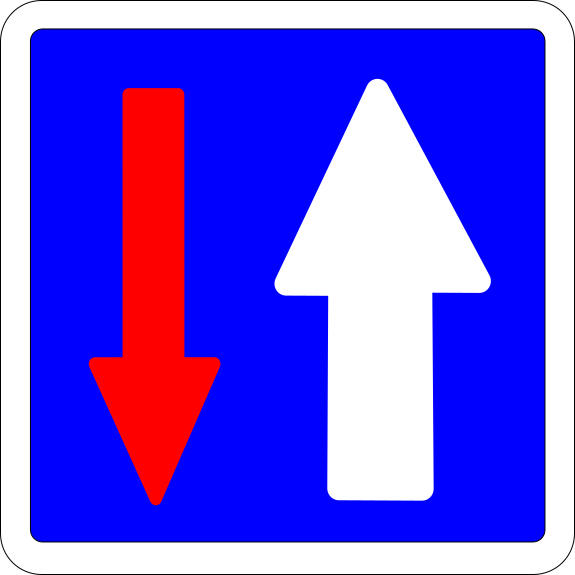
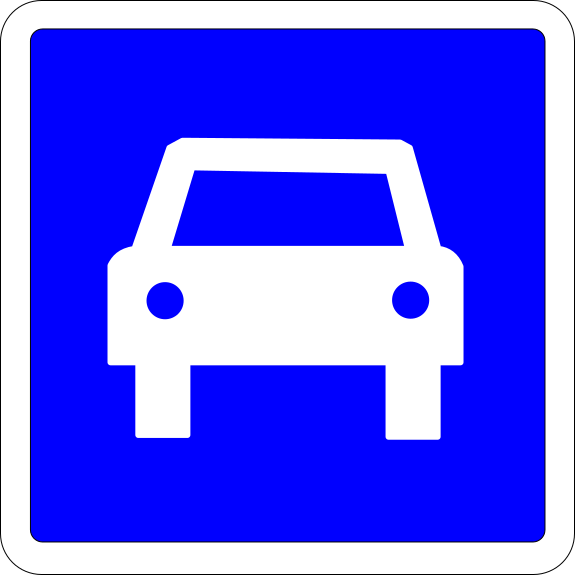
These signs inform you about how traffic is organised: one-way street, pedestrian crossing, dead end, lane reduction, emergency stopping bay, etc. They do not require you to do anything — they help you understand the situation.


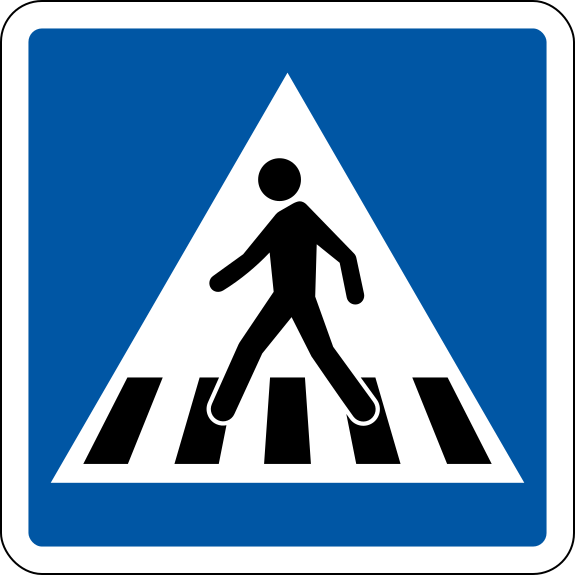
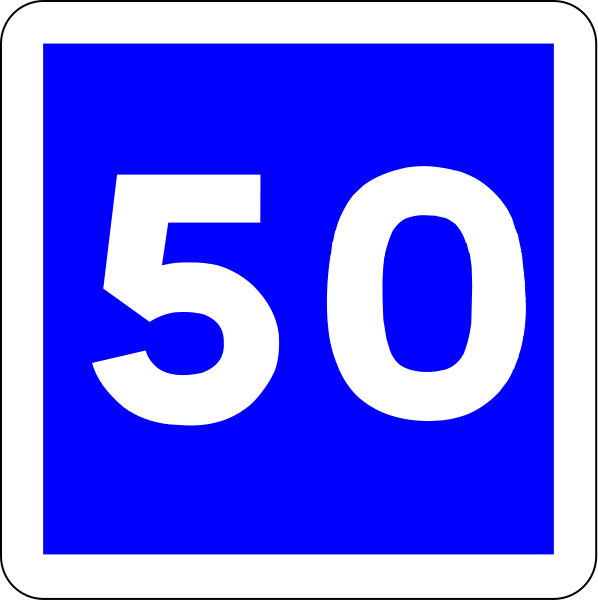

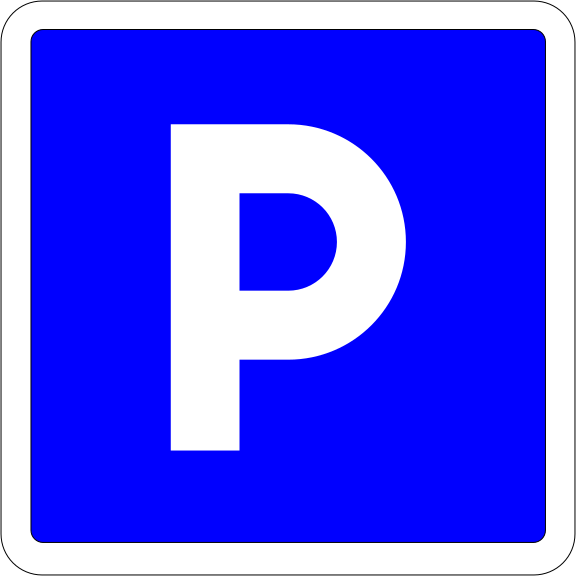
The advisory speed sign (number on a square blue background) must not be confused with the speed limit sign (number on a round white background with a red border). The advisory speed is a recommendation, not an obligation.
Cycle lane: mandatory or advisory?
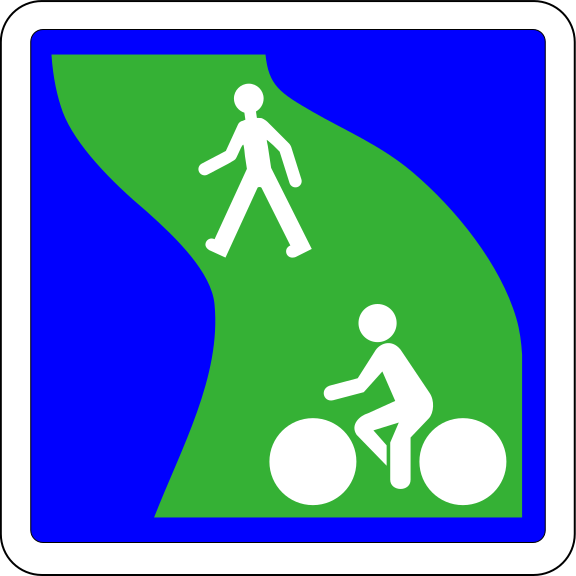
Take care to distinguish two signs that look similar but are very different. The round blue sign with a bicycle is a mandatory sign: cyclists must use this lane. The square blue sign with a bicycle is an information sign: it indicates the existence of a cycle lane, but cyclists are not obliged to use it and may ride on the main carriageway.
Common exam trap: when the cycle lane is merely 'indicated' (square sign), cyclists may perfectly well ride on the main carriageway. Do not be surprised!
Services and facilities (white background, blue border)
These signs indicate the presence of facilities nearby: first-aid post, petrol station, hospital, rest area, information point. They are square with a white background surrounded by a blue border, which visually distinguishes them from driving information signs.
Location and direction signs
Rectangular signs are used for location (town name, locality, waterway). Arrow-shaped signs point towards a destination. The colours indicate the type of road: blue for motorways, green for major national or departmental roads, white for local destinations, yellow for alternative routes, and brown for tourist sites.
More useful information signs
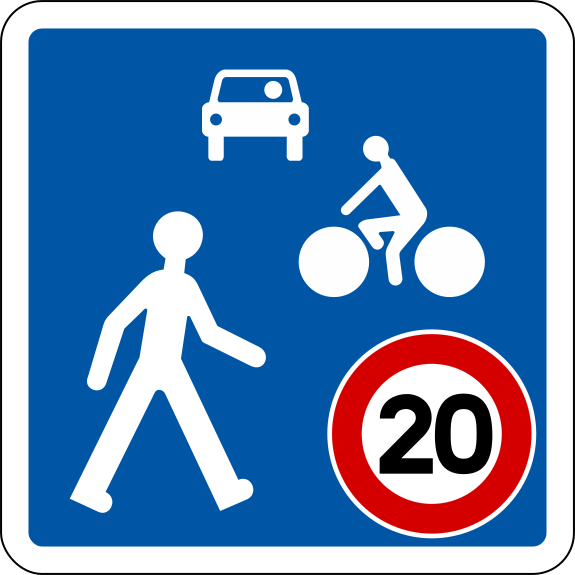



Recap
- Square blue = driving information (useful information without obligation).
- White square with blue border = services and facilities.
- Direction signs use a colour code: blue (motorway), green (national road), white (local), yellow (alternative), brown (tourism).
- The advisory speed (blue square) is not compulsory, unlike the speed limit (red circle).
Test yourself
A square blue sign with a bicycle means:
- ○Cyclists must use this lane
- ✓A cycle lane exists, but its use is not compulsory
- ○Bicycles are prohibited on this road
- ○End of cycle lane
Correct answer : A cycle lane exists, but its use is not compulsory
Which colour of direction sign indicates an alternative route?
- ○Blue
- ○Green
- ○White
- ✓Yellow
Correct answer : Yellow
Sources: Sécurité routière (securite-routiere.gouv.fr) and service-public.fr.