Danger signs
Recognising and understanding the triangular signs that alert you to a hazard on the road.
Updated 13 June 2026
What are danger signs for?
The role of danger signs is to warn the driver that a hazard lies ahead on the road. They do not give orders — they simply tell you, 'Caution, something dangerous is approaching.' It is then up to you to adapt your driving accordingly: slow down, be extra vigilant and anticipate.
A danger sign does not prohibit or require anything. It simply informs you of an upcoming hazard.
How to recognise them?
Their shape is always the same: a triangle pointing upwards, with a red border and a white background. The symbol in the centre of the triangle specifies the nature of the hazard. Remember this simple rule: triangle = danger.
In the exam, if you see a triangular sign with a red border, think 'danger' straight away. If the background is yellow instead of white, it is a temporary danger sign (roadworks, accident).
At what distance are they placed?
Danger signs are placed before the hazard to give you time to react. The distance depends on the context:
Outside built-up areas: the sign is placed roughly 150 metres before the hazard. In built-up areas: roughly 50 metres before.
If the actual distance differs from these standard values, a small supplementary panel (called a sub-sign) placed beneath the danger sign indicates the exact distance. For example, a sub-sign reading '500 m' means the hazard is 500 metres ahead.
Do not confuse the distance sub-sign with the extent sub-sign! The extent sub-sign has two small black arrows on either side of the number. It indicates the length over which the hazard extends (for example, '4.5 km' of bends). In that case, the first hazard remains at the normal distance from the sign.
The most common danger signs
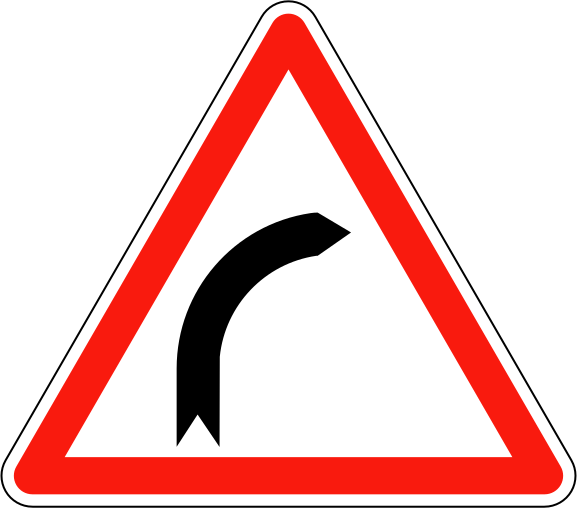
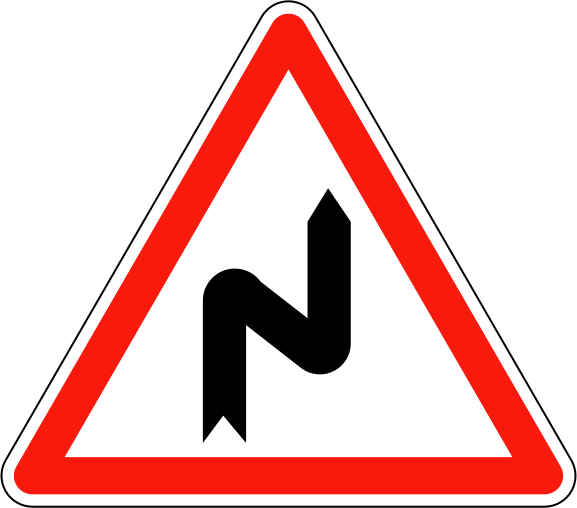
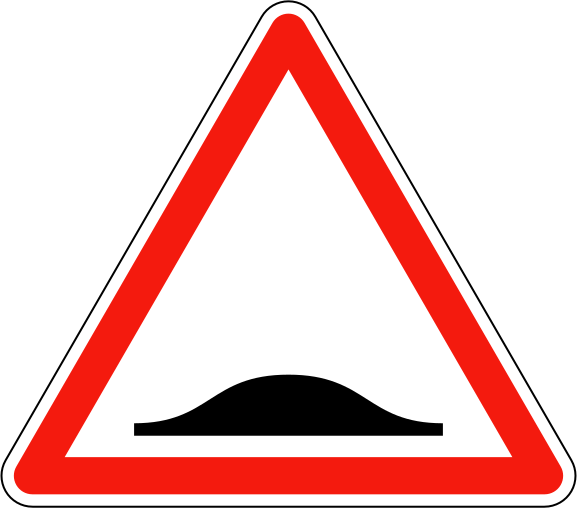
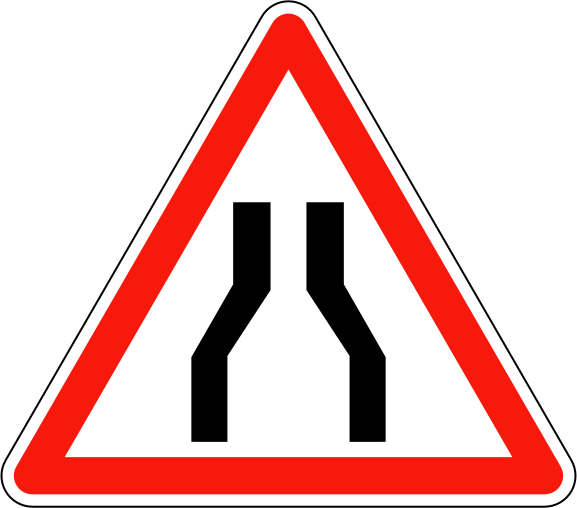
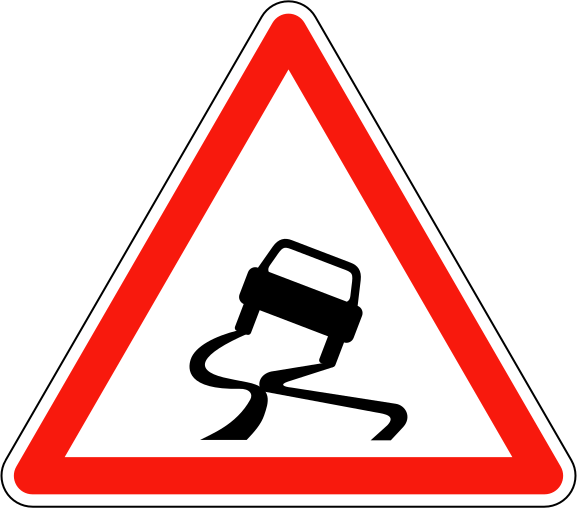
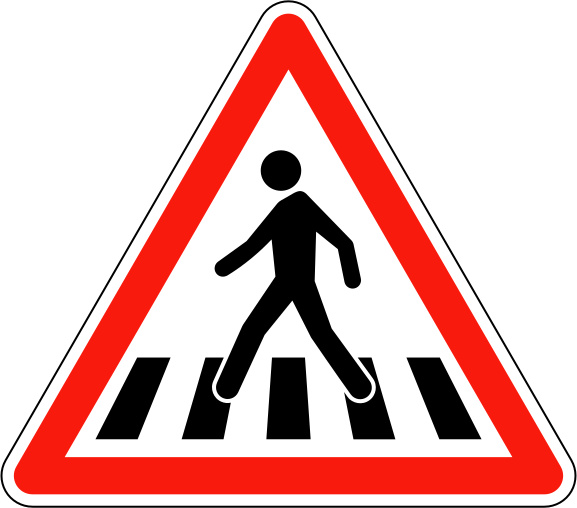
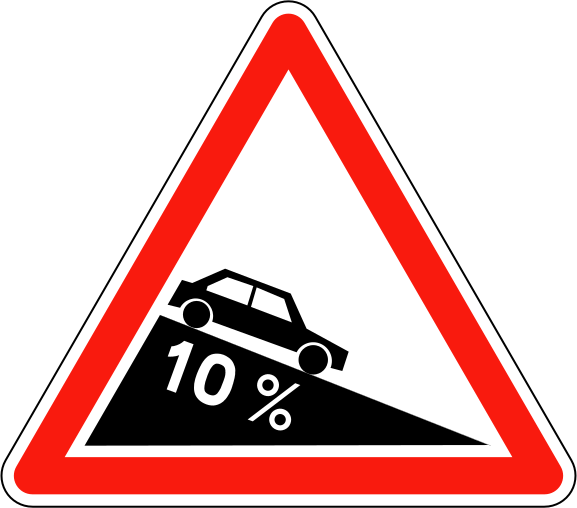
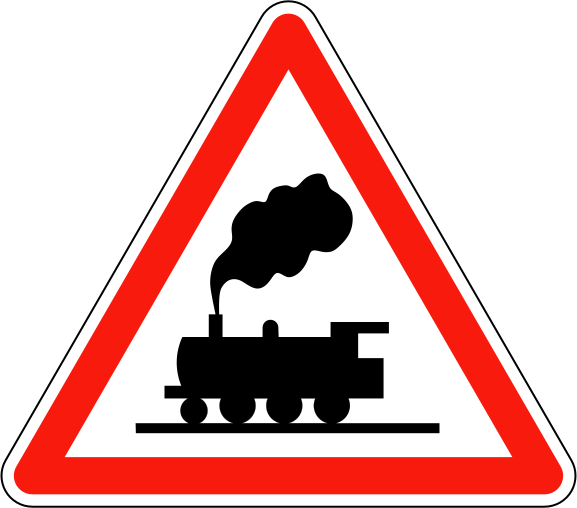
Classic exam traps
Some danger signs are often misinterpreted. Here are the most important ones to understand properly:
The 'Area frequented by children' sign does not necessarily mean there is a school nearby. It could be a park, a playground or any place where children are regularly present.
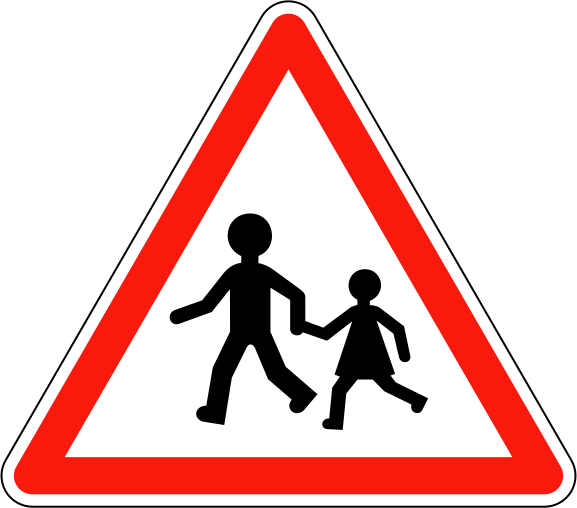
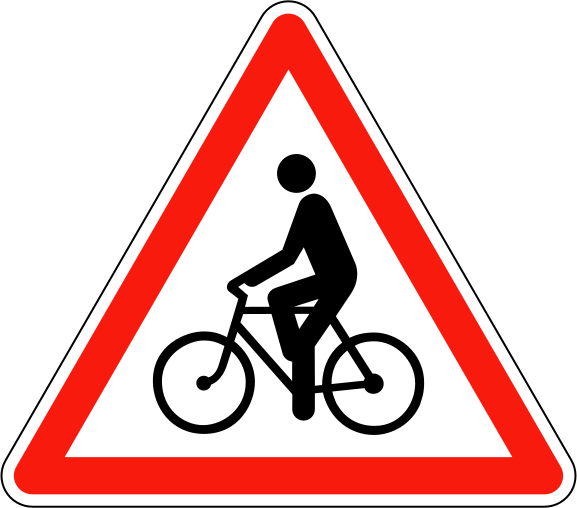
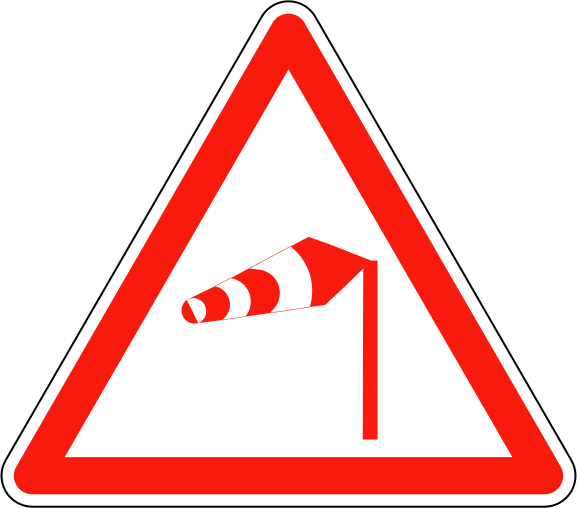
The 'Cyclists emerging' sign warns that cyclists may appear from both sides of the road, not just the side shown on the sign. Another trap: the 'Crosswind' sign warns you of possible gusts, but does not tell you the direction or strength of the wind. Only the windsock gives you that information.
The special case of two-way traffic
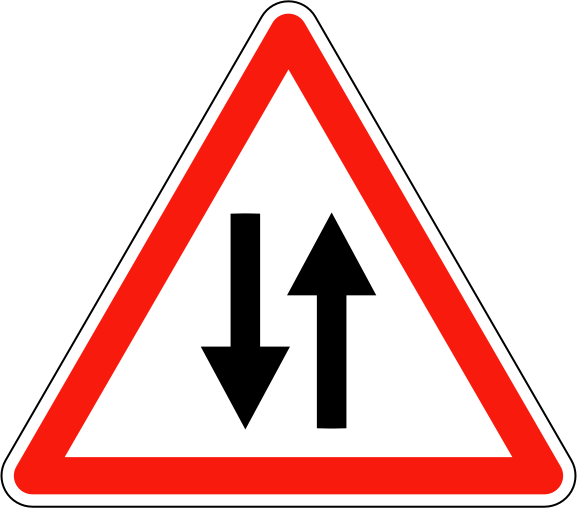
The 'Two-way traffic' sign is an exception among danger signs. Unlike the others, it is not placed 50 or 150 metres before — it is located exactly at the point where the road becomes two-way. Be especially vigilant at that moment.
What to do when you encounter a danger sign?
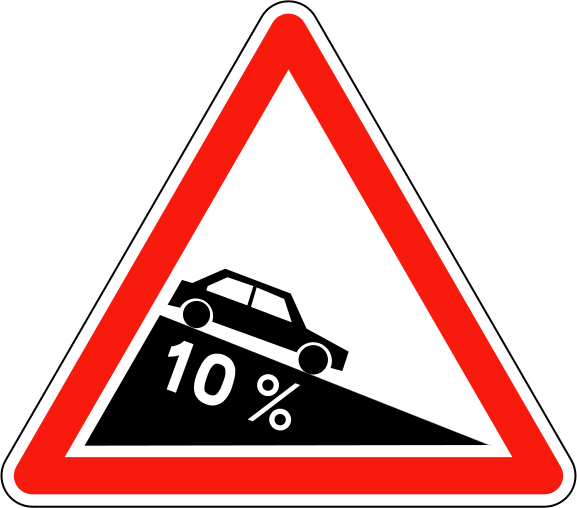
The correct reaction can be summed up in three reflexes: slow down gradually, observe the surroundings carefully, and be ready to react (braking, changing course). On a steep descent, use engine braking by shifting to a lower gear rather than keeping your foot on the brake pedal continuously.
Engine braking means downshifting (selecting a lower gear) to let the engine slow the vehicle naturally. It is essential on long descents to prevent the brakes from overheating.
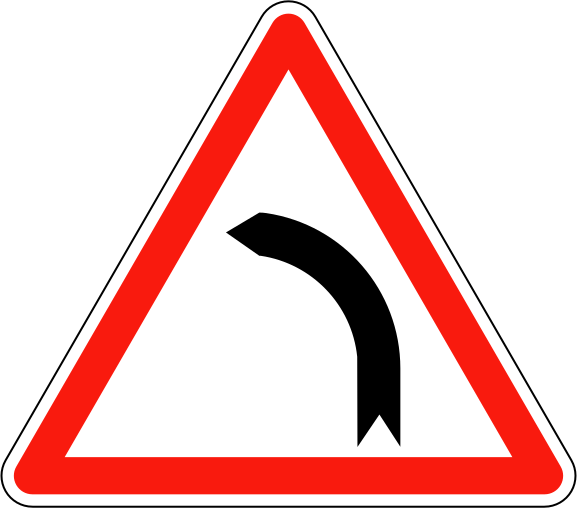
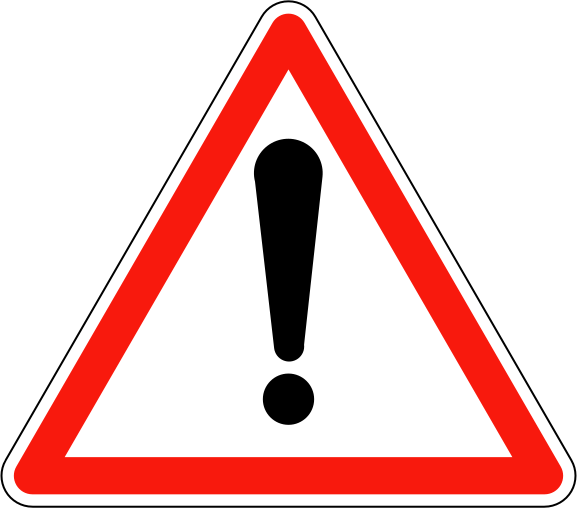
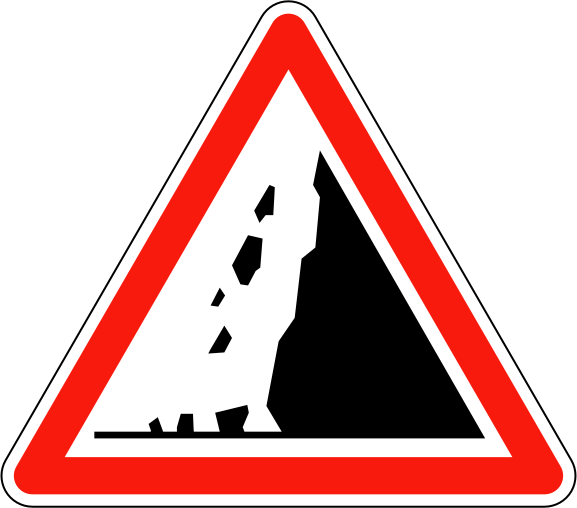
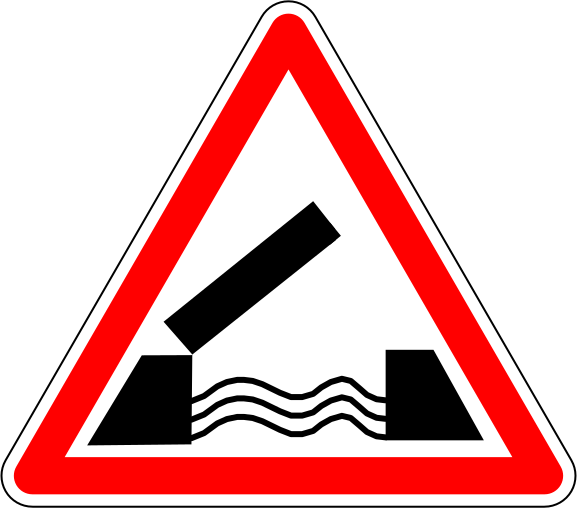
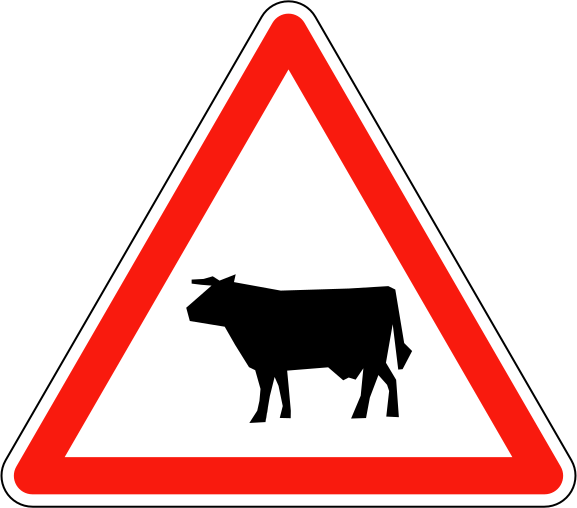
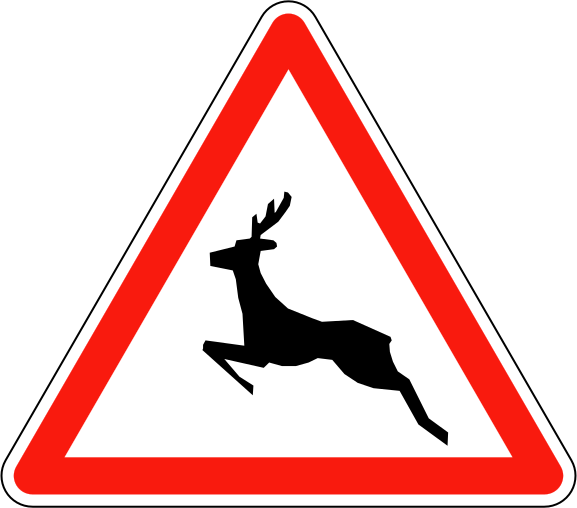
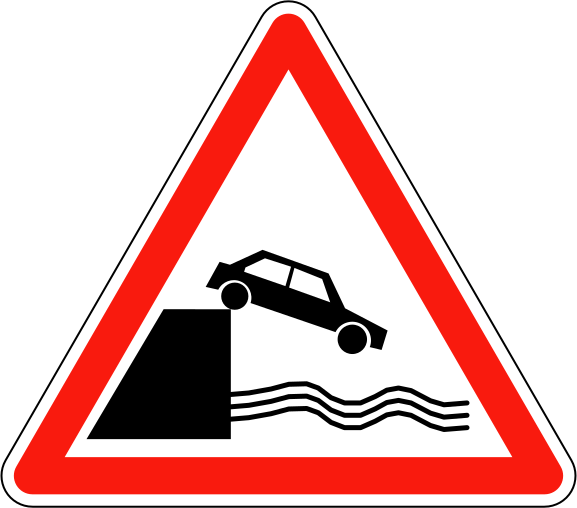
More common dangers to recognise
Recap
- Danger signs are triangular, with a red border on a white background.
- They are placed 150 m from the hazard outside built-up areas and 50 m inside.
- A distance sub-sign (number only) specifies the exact distance if it differs.
- An extent sub-sign (with two arrows) indicates the length over which the hazard persists.
- The 'Children' sign does not necessarily mean a school.
- The 'Two-way traffic' sign is placed exactly at the changeover point, not before.
- A yellow background instead of white indicates a temporary danger sign.
- When facing a danger sign: slow down, observe, anticipate.
Test yourself
What is the shape of a danger sign?
- ✓Triangular with a red border
- ○Round with a red border
- ○Square with a blue background
- ○Rectangular with a green background
Correct answer : Triangular with a red border
Outside built-up areas, how far from the hazard is the sign usually placed?
- ○50 metres
- ○100 metres
- ✓150 metres
- ○200 metres
Correct answer : 150 metres
Sources: Sécurité routière (securite-routiere.gouv.fr) and service-public.fr.