Sign families: shapes and colours
Recognise any sign from its shape and colour, even before you know its exact meaning.
Updated 15 June 2026
Read a sign at a glance
There are hundreds of signs, but you don't need to memorise them all. The shape tells you the family, and the colour tells you the type of message. With these few rules you can understand a sign you've never seen.
Shape = family. Colour = type of message.
1. The shape gives the family
Four main shapes: the triangle warns of danger, the circle gives an order (prohibition or obligation), the square gives information, and the arrow shows a direction.
Danger signs — the triangle
A red-bordered triangle. On a white background the danger is permanent; on a yellow background it is temporary (roadworks, accident, event). A danger sign gives no order — it warns you of a risk ahead.
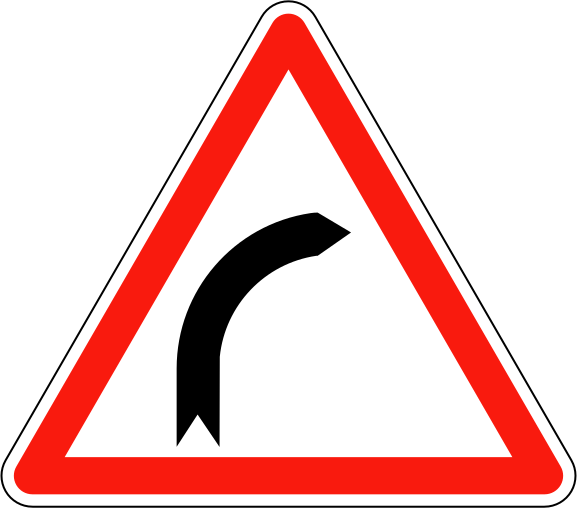
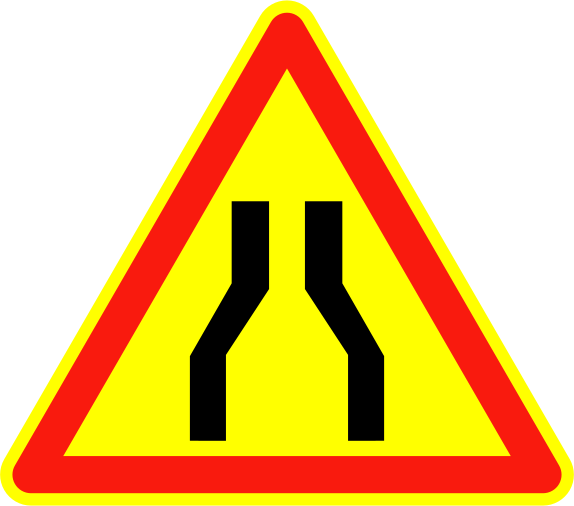
React by slowing down and staying alert. The danger is signalled about 50 m ahead in town and 150 m ahead outside built-up areas.
Regulatory signs — the circle
Round signs give an order. A red border means a prohibition; a blue background means an obligation. A bar (black or red) marks the end of the rule. The rule generally applies from the sign onward.


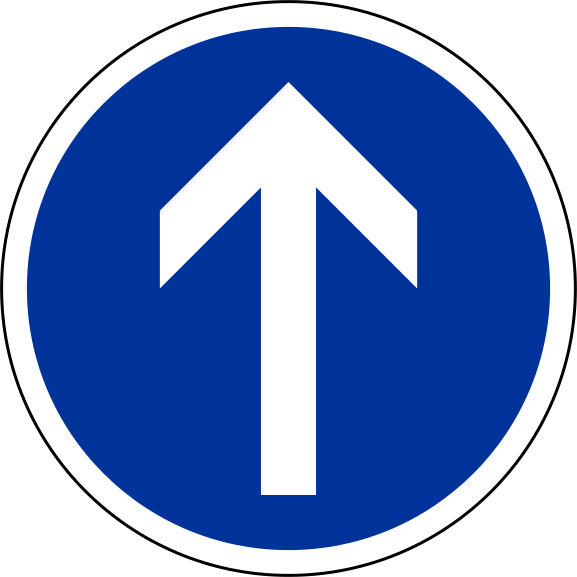
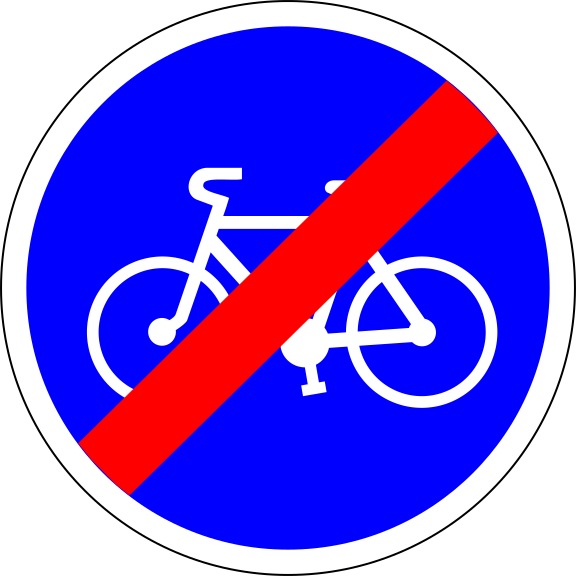
Red border = prohibited · Blue background = compulsory · Bar = end of the rule.
Information signs — the square
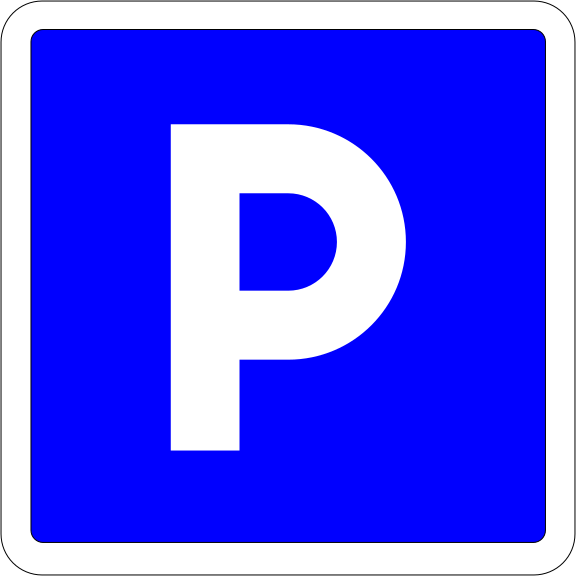
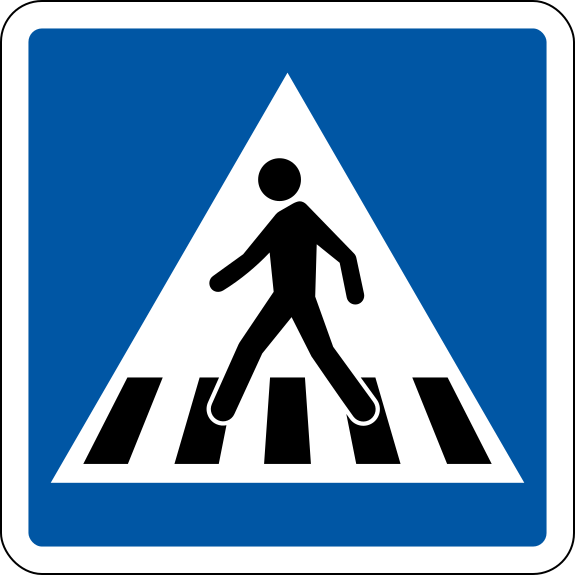
Squares or rectangles, most often on a blue background. They give useful information (parking, pedestrian crossing, services) or a caution, without imposing a strict order.

Direction signs — the arrow
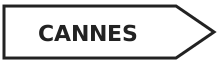
Arrow-shaped, they guide you to your destination. The colour shows the route type: green for major cities, blue for motorways, white for local roads, yellow for a temporary route.


Colour summary
Red = danger or prohibition. Blue = obligation or information. Yellow = temporary. Green = direction to major cities.
With shape and colour, you can classify any sign in seconds.
Recap
- Shape gives the family: triangle = danger, circle = order, square = information, arrow = direction.
- Colour refines the message: red = danger/prohibition, blue = obligation/information, yellow = temporary.
- White background = permanent; yellow background = temporary.
- A bar on a round sign marks the end of the rule.
Test yourself
A red-bordered triangular sign belongs to which family?
- ✓Danger
- ○Prohibition
- ○Information
- ○Direction
Correct answer : Danger
What does a round sign with a blue background mean?
- ✓An obligation
- ○A prohibition
- ○A danger
- ○Tourist information
Correct answer : An obligation
Sources: Sécurité routière (securite-routiere.gouv.fr) and service-public.fr.